Colour coding of food products, its impact on the trade dress of products and the intent of the FSSAI – Safir Anand and Shilpi Jain share their views on the Food Safety and Standards (Packaging and Labelling) Regulations 2011 in a guest post for the World Trademark Review.
The riveting guest post titled “Why India’s colour-coded label plan should be a concern for FMCG brand owners” was published last week. It focuses on the proposed revision of the Food Safety and Standards (Packaging and Labelling) Regulations 2011 which aims at regulating the labelling and packaging of food products, amongst others. More importantly, colour coding of food products, for example, red for unhealthy products, amber for moderately healthy products and green for healthy products. These regulations as intended by the FSSAI warrants serious consideration by the food and beverage industry.
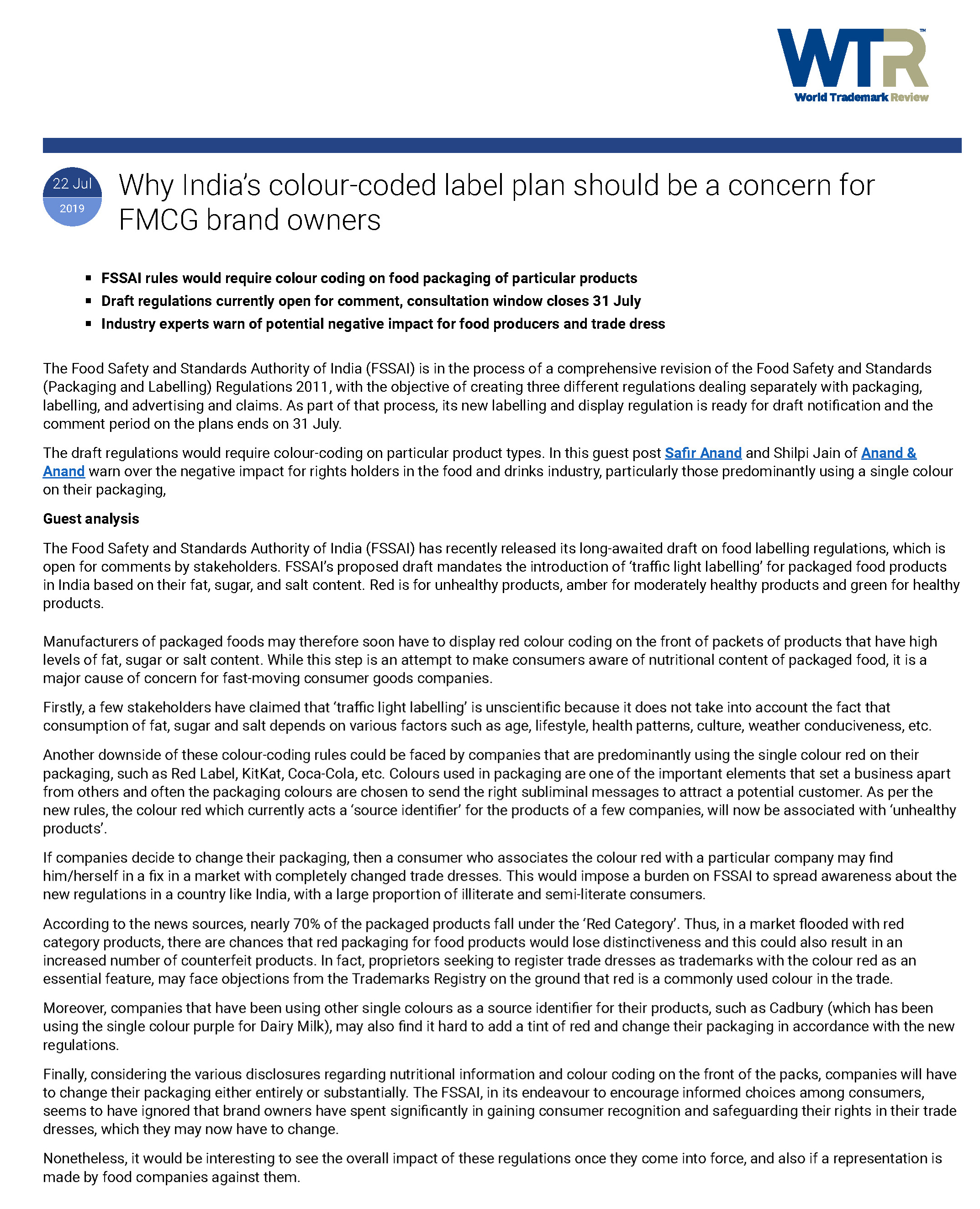
The informative post can be read at WTR’s online publication (see image below) – “…Manufacturers of packaged foods may therefore soon have to display red colour coding on the front of packets of products that have high levels of fat, sugar or salt content. While this step is an attempt to make consumers aware of nutritional content of packaged food, it is a major cause of concern for fast-moving consumer goods companies…”
 etc. whilst wrongfully claiming to be part of our firm and making false claims and allegations.