A Tata Sons’ group company and PepsiCo India Holdings Private Limited entered into a joint venture to produce non-carbonated, ready-to-drink beverages, one of which is ‘Tata Water Plus’, a nutrient water.
For its instant recognisability and pre-eminence irrespective of the class of goods for which it is used, the well-known TATA mark was prefixed in the TATA WATER PLUS trademark.
Tata Sons approached the Delhi High Court after it discovered the production and sale of pouches of drinking water under the infringing brand name TAZA WATER PLUS by the defendant. Tata Son’s trade dress had been mimicked– down to the colours, fonts and arrangement of features (see below).
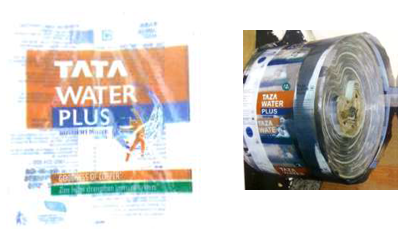
An ex parte ad interim injunction was granted by the Delhi High Court and a Local Commissioner appointed by the court in October 2016 confirmed the infringing activities of the defendant. The defendant stayed away even after service of summons and was proceeded against ex parte.
In light of the overwhelming evidence of infringement, the court waived leading of ex parte evidence.
It noted that mere perusal of the photographs of the impugned product bearing the infringing brand name and mark TAZA WATER PLUS showed it was deceptively similar to the plaintiff’s well-known mark TATA WATER PLUS and a comparison of the products’ packaging showed that the defendant had adopted a trade dress identical to that of Tata Sons.
These factors, the court noted, “brings to the fore the ulterior motive of the defendant entity of passing off its products” as those of Tata Sons. It added that the activities “are a blatant manifestation of the mala fides on the part of the proprietor of the defendant”.
The court observed that “the illegal and infringing activities of the defendant entity assumed a greater magnitude given the fact that the impugned product is packaged drinking water (pouches), which being of inferior quality, may lead to health issues which might even prove fatal. The plaintiffs have no control whatsoever over the activities of the defendant entity and will be held responsible for the same.”
It granted a permanent injunction against the defendant from infringing the TATA trademarks and trade dress. In addition, the court awarded legal costs and court fees.
The food and beverages industry is in equal parts lucrative and complex. Products must meet food safety laws, advertising requirements, adhere to stringent metrology rules and supply chains need to be water tight.
Regulators are more demanding of quality control, particularly in the bottled water industry – even more so for nutrient-added beverages. The attributes defining the product’s quality, including adherence to government requirements, and more, are also embodied in the brand.
Tata Sons Limited & ors v M/s Mayuri Beverages; before the Delhi High Court; judgment dated 9.11.2017
 etc. whilst wrongfully claiming to be part of our firm and making false claims and allegations.