The definition of trade marks in most jurisdictions of the world includes Signature. Section 2 (m) of the Trade Marks Act, 1999 states that a mark includes ‘signatures’. The signatures of John Hancock, Taylor Swift, John Lennon, Sachin Tendulkar, Shah Rukh Khan are registered as trademarks. The famous Indian actress Kareena Kapoor also applied for registration of her signatures as a trade mark in classes 3, 18, 25 and 35. Similarly, Philip Morris has applied for registration of its signatures under the company name Philip Morris Brands SARL. Shah Rukh Khan went a step ahead and filed trademark application for his initials SRK too. However, it would be wrong to assume that only a celebrity or his successor can register signatures. Even an ordinary person can apply for registration of his / her signatures. To take an example, a photographer named Piyush Bedi based in Ludhiana, India applied to register his signatures in class 41 for photography services.
An application to register a person’s signature can be made by that person, or with his consent in writing by his representative. Signatures are considered to be prima facie inherently distinctive marks since signature is distinctive of the individual who signed. An authentic signature is distinctive of the individual who signed. However, a signature which is in non distinctive or in ordinary script / font (like Times New Roman) may not be considered as a signature but will be treated like a personal name or surname.
The owner of the signatures can even assign or license his signatures to a third party for commercial use. Big Dog Production Inc. filed application for registration in US for Jay Leno signatures as shown below
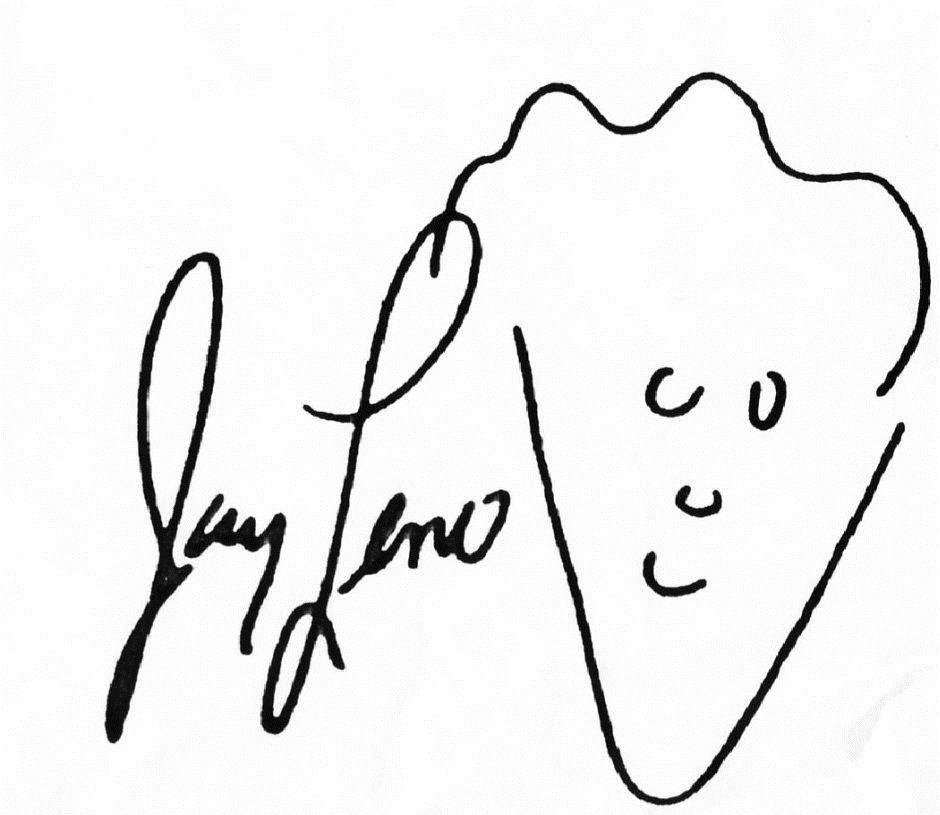
It is important to note that in addition to usual procedure, for successful registration of signature as trademark, it is pertinent to prove the authenticity of the signature (usually, for deceased persons) and that the signature is not in common font and is distinct.
Authored by Shilpi Mehta Nanda.
 etc. whilst wrongfully claiming to be part of our firm and making false claims and allegations.