Managing Partner Pravin Anand and Managing Associate Vibhav Mithal represented Anand and Anand at the 14th Global IP Conference held in Goa.
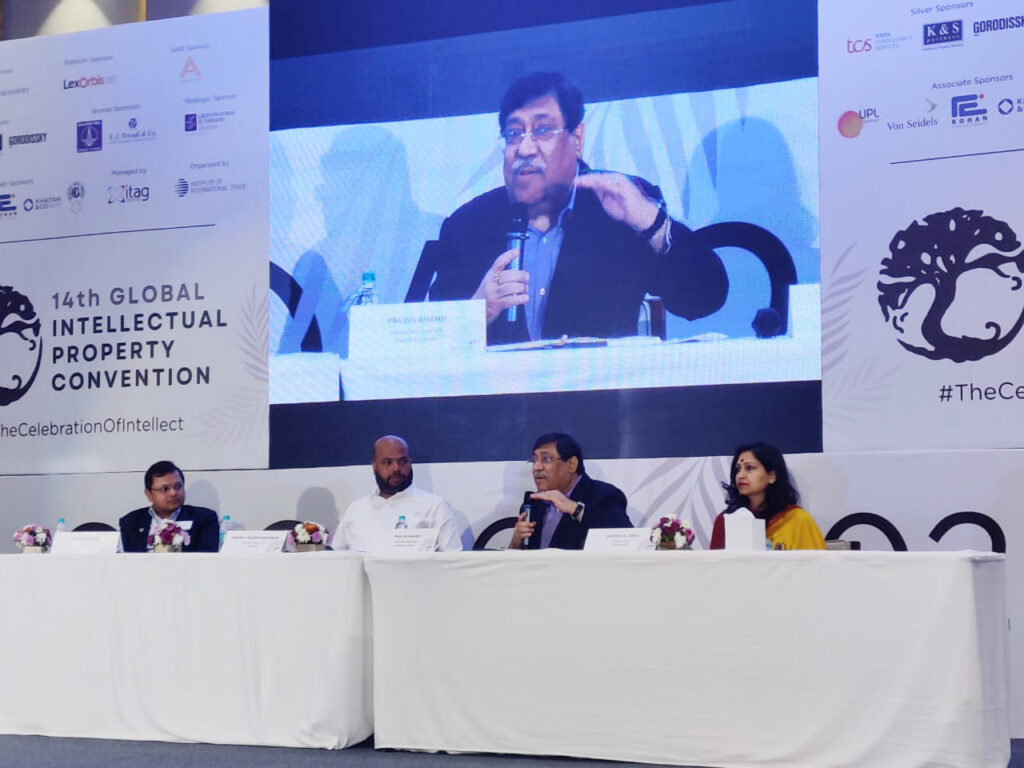
Pravin Anand moderated, and spoke in, the panel – ‘Recalibrating IP Strategy in the context of 5G and Industry 4.0’, comprising Lakshika Joshi, Rajeev Gupta and Pranay Prabhugaunkar. In an engaging discussion, the panel discussed the value that Intellectual Property plays in the innovation eco-system, with specific focus on patents. Setting the context, Mr. Anand started the session by providing statistics around the number of patents filed by India, in contrast to other countries, and the fact that India has about 84,000 Startups as on date and explored how patents could be further utilized. The panel also discussed how with the changing business environment IP disputes would also expand to new frontiers such as data protection, and how data protection laws would have to be balanced with AI innovation. The panel also appreciated the clarity brought about by the Ferid Allani decision, and the important role the Delhi High Court is currently playing in the enforcement of Intellectual Property rights for various businesses. Additionally, Mr. Anand highlighted the value of the National Data Governance policy of the Indian government, and with the rising value of Data, explored with the panellists whether akin to SEPs, it was possible for data licenses to be issued in the future in a manner similar to FRAND terms.
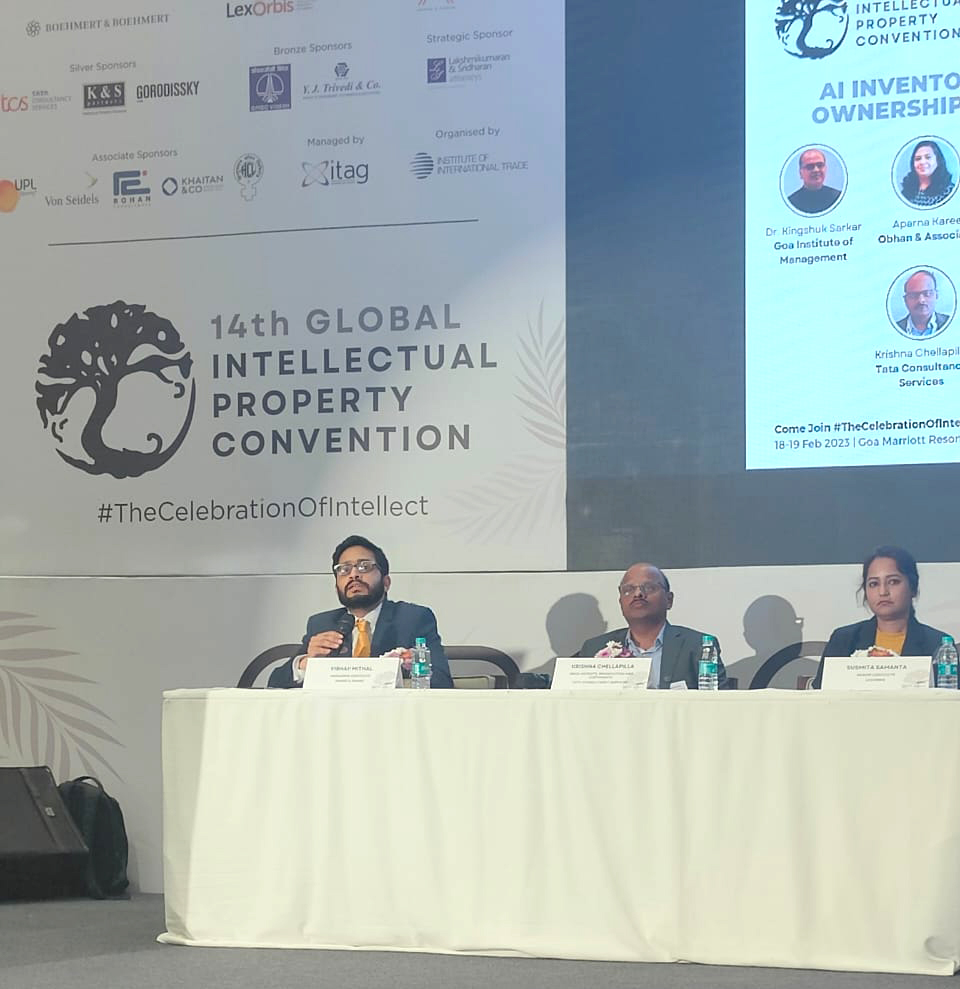
Vibhav Mithal spoke at the panel ‘AI Inventorship, Patent Ownership & Legislation. To set the context, Vibhav spoke on ‘What is AI’ from a non-technical perspective, highlighting that current AI applications qualify as Artificial Narrow Intelligence, and that AI ought to be viewed as a pattern recognition tool. Further, Vibhav highlighted the role that humans continue to play in the AI development process such as training AI systems, and explaining the results of AI systems. Further, on AI legislation, Vibhav indicated how one of focuses of businesses while developing AI systems to is to build an ‘unbiased’ and ‘fair system’. Tracking these subjective components, Vibhav, taking the example of the EU AI Act, which is first law currently proposed on AI, highlighted that current AI legislation seeks to look at these concepts by regulating the ‘use’ of AI systems by establishing a risk categorization of prohibited, high risk, medium and low risk. Vibhav highlighted the risk categorization of AI systems is also indicated in reports published by the Niti Aayog on Responsible AI, and in the Fairness Standard published recently by the Department of Telecommunications. While the final position may only emerge in future, it was emphasized that when businesses develop AI systems, they should better understand the risk that their AI system may pose, so that they make take pre-emptive steps and appropriate advice at the stage of development. On the issue of IP, Vibhav highlighted that UK IPO did not consider it necessary to change patent laws as of June 2022, for AI devised inventions, and that the USPTO was now re-examining this question.

 etc. whilst wrongfully claiming to be part of our firm and making false claims and allegations.